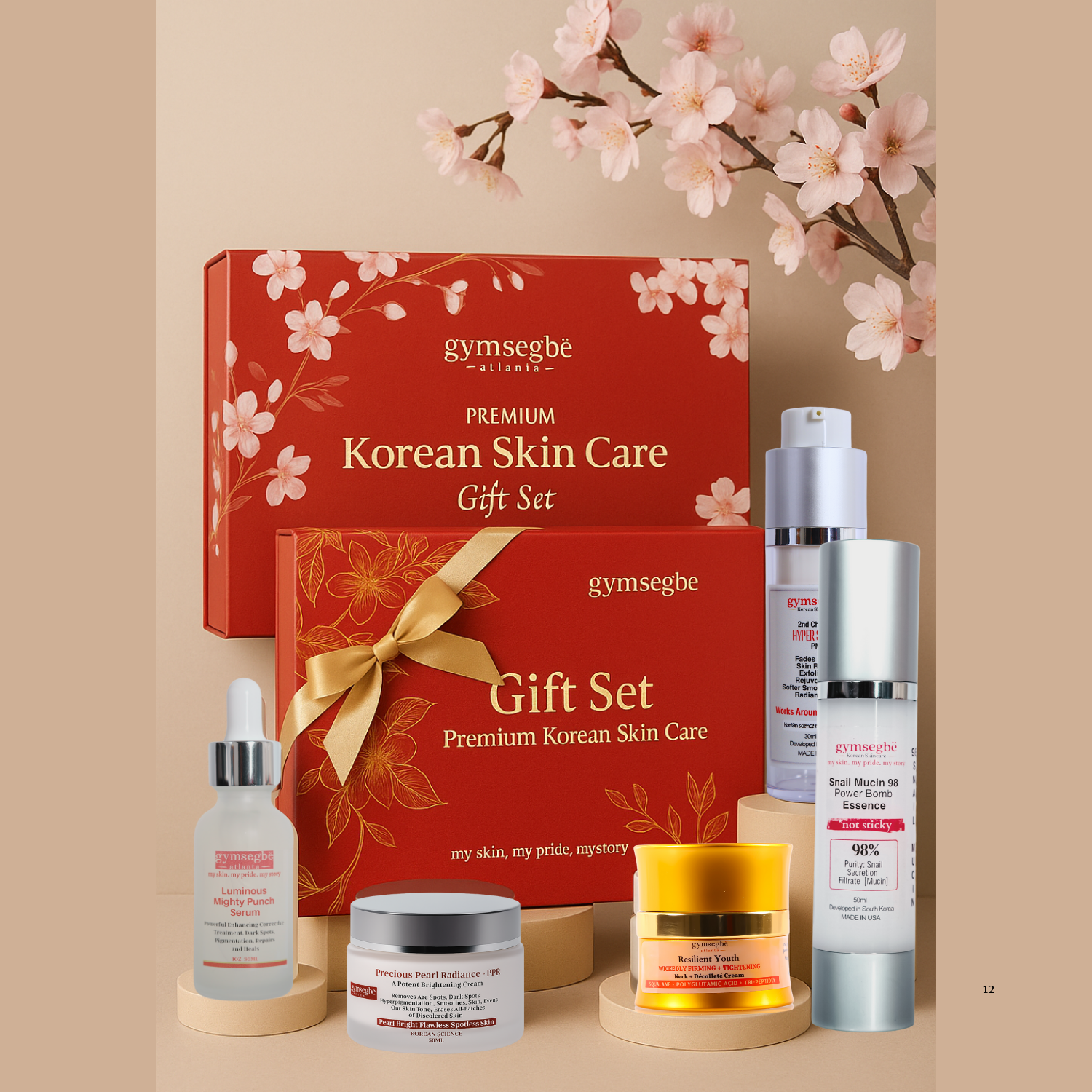

The Death of the 10-Step Routine: Why Skin Minimalism Took Over

Skin Intelligence
The Death of the 10-Step Routine
Why skin minimalism and barrier recovery took over, what “cellular-level” skincare actually means, and where retinol alternatives fit when your goal is long-term performance.
By Gymsegbe Editorial Team · October 8, 2026 · 12-minute read

Quick answer
Skin minimalism replaced the rigid 10-step routine because more layers do not automatically create better results. A longevity-minded routine gives every product one of three jobs: protect the skin, support the barrier, or target a specific concern. Retinoids remain the most established topical option for photoaging, but a lower-intensity retinoid, bakuchiol, peptides, niacinamide, and barrier-supportive moisturizers can play different roles when tolerance or recovery matters. They are not interchangeable, and none makes sunscreen optional.
For years, the 10-step Korean skincare routine was treated like a passport to better skin. Oil cleanser. Water cleanser. Exfoliant. Toner. Essence. Serum. Sheet mask. Eye cream. Moisturizer. Sunscreen. The list was neat, memorable, and very good at selling the idea that one more layer might be the missing answer.
But a framework became a mandate. People began combining exfoliating acids, retinoids, brightening serums, masks, and scrubs in routines that looked disciplined on a shelf and felt increasingly chaotic on the face.
The correction is not anti-Korean skincare, anti-active, or anti-ritual. It is more mature than that. Skin minimalism asks a harder question: What is each step doing, and can my skin sustain it long enough to benefit?
The future of skincare is not fewer products at any cost. It is fewer competing instructions for the same skin.
Why the 10-step era ended
The original appeal of layered skincare was not that every person needed ten products every day. It was the idea that care could be gradual, hydrating, and customized. The trouble started when step count became a proxy for seriousness.
Skin does not award bonus points for complexity. Every additional cleanser, exfoliant, active, fragrance, or botanical also adds another variable: another potential irritant, another formulation interaction, another reason to quit when the routine becomes expensive or exhausting.
That is why skin minimalism is better understood as routine editing, not routine deprivation. You remove duplication. You separate strong treatments instead of stacking them. You keep the steps that deliver the most value consistently: appropriate cleansing, moisturizing, daily sun protection, and one treatment chosen for one priority.
What “skin longevity” should mean
“Longevity” can easily become another beauty buzzword. In useful terms, skin longevity means preserving function and appearance over time: limiting avoidable UV damage, supporting the outer barrier, maintaining hydration, and using targeted treatments at a frequency the skin can tolerate.
It does not mean stopping biological aging, reversing time, or finding one ingredient that controls every cellular process. Chronological aging continues. Sun exposure, genetics, hormones, health, environment, and behavior all matter. Skincare is one part of that picture.
This is why a routine can be “gentle” and still fail: it may hydrate without addressing the reader’s actual concern. It is also why a routine can be “powerful” and still fail: irritation can make consistent use impossible. Long-term performance lives between those extremes.

What does “treating the skin at a cellular level” actually mean?
The phrase sounds impressive, but it needs boundaries. The outermost barrier, the stratum corneum, is made largely of flattened, non-living corneocytes arranged within a lipid matrix. Beneath it are living epidermal cells and, deeper still, the dermis. Different ingredients act in different places and by different mechanisms.
A moisturizer does not need to reach the dermis to matter. Its work at or near the surface can reduce water loss, improve softness, and support the organization of the barrier. Sunscreen performs its crucial job at the surface by reducing UV exposure. Retinoids, by contrast, are valued because vitamin A derivatives can influence cell turnover and other pathways associated with photoaged skin; topical tretinoin remains the benchmark with the deepest evidence base, although irritation often limits use.1
So the useful question is not, “Does this reach the cellular level?” It is:
- What layer or process is this product designed to influence?
- Is that mechanism relevant to my concern?
- Does the finished formula have evidence, or are we borrowing a story from one ingredient?
- Can I use it consistently without creating a new problem?
A product that stays near the surface can be essential. A product described as “cellular” can still be overhyped. Depth is not a quality score.

Why barrier recovery became the new performance strategy
The skin barrier is not a decorative idea. It is the outer system that helps keep water in and unwanted substances out. Ceramides, cholesterol, and free fatty acids are part of the lipid structure between corneocytes.2 When that system is stressed, skin may feel tight, rough, flaky, itchy, or more reactive. Harsh cleansing and over-exfoliation can contribute to that cycle.3
Barrier recovery took over because it solved a practical contradiction: consumers wanted visible results, but many could not sustain the routines meant to deliver them. Moisturizer became more than the final comfort step. It became part of active strategy. The American Academy of Dermatology notes that daily moisturizer can help people tolerate drying acne treatments, including retinoids.4
That does not mean every sting signals damage or that all exfoliation is harmful. It means burning, persistent peeling, or worsening sensitivity should not be reframed as proof of efficacy. A treatment only works in real life if you can use it as directed.
Barrier recovery is especially relevant for people with dryness, reactive-feeling skin, changing or mature skin, and discoloration-prone skin. The AAD cautions that irritation from retinoids can trigger dark marks in skin of color and advises starting slowly and using moisturizer.5
The three-job test: protect, support, target
Gymsegbe’s alternative to step-count skincare is simple: every product should have a job. If two products are doing the same job without adding a meaningful benefit, one may be optional.
1. Protect
Remove what needs removing without leaving skin feeling stripped, then reduce preventable UV exposure with broad-spectrum, water-resistant SPF 30 or higher, shade, and protective clothing.6 Sun protection is the non-negotiable longevity step.
2. Support
Use hydration and moisturizer to help maintain comfort and reduce water loss. Look for a formula appropriate to your skin, climate, and treatment load. Humectants attract water; emollients smooth; occlusives help reduce evaporation; barrier lipids can support the outer structure.
3. Target
Choose one priority: uneven-looking tone, rough texture, fine lines, breakouts, or dehydration. Then choose one primary treatment and introduce it deliberately. A second treatment should solve a different problem, not simply intensify the first.
This framework does not ban toners, essences, masks, or eye creams. It changes their status from required to justified. An essence that adds meaningful hydration may earn its place. A second acid that duplicates the first probably does not.

Retinol alternatives, ranked without the hype
Retinol is not dead. It is one type of retinoid, and retinoids remain among the most researched topical options for uneven tone, texture, and fine lines. The shift is away from treating maximum intensity as the only serious path.
A 2024 systematic review comparing tretinoin with other topical approaches concluded that tretinoin remains the gold standard for photoaging. Several comparators were better tolerated, but the authors found the overall comparative evidence too limited or biased to declare a new first-line replacement.1
| Option | What it can reasonably do | What it cannot honestly promise | Best fit |
|---|---|---|---|
| Lower-intensity retinoids or less frequent use | Preserve a vitamin A pathway while reducing treatment intensity. Retinaldehyde and retinol are generally less irritating than tretinoin, though formulas vary.7 | They are not “retinol-free” if avoiding the entire retinoid family is the goal, and lower irritation is not guaranteed. | People who want retinoid evidence but need a slower entry point, with clinician guidance where appropriate. |
| Bakuchiol | One 12-week, 44-person randomized study found improvements in wrinkle surface area and hyperpigmentation comparable with the tested retinol regimen, with less reported scaling and stinging.8 | It has not earned a universal “natural retinol” equivalence. A 2024 review found most human trials had weak designs, mixed formulas, or high risk of bias.9 | Someone exploring a non-retinoid cosmetic option who understands that the evidence base is still developing. |
| Peptides | Can be used in formulas designed to support smoother-, firmer-looking skin. Their role depends on the specific peptide, delivery system, concentration, and finished formula. | “Peptide” alone does not prove collagen remodeling or establish equivalence to a retinoid. | People prioritizing a supportive, lower-drama routine while still addressing the look of firmness and fine lines. |
| Niacinamide | Can support barrier function and the look of uneven tone in well-formulated products. Studies of niacinamide-containing moisturizers have reported improvements in hydration and barrier measures.10 | It does not reproduce retinoid biology and should not be sold as a direct substitute. | People who want one ingredient category to support both resilience and visible tone concerns. |
| Ceramides, cholesterol, fatty acids, humectants, and emollients | Help support the outer barrier, hydration, softness, and comfort. They can make a treatment routine easier to tolerate. | They are not retinoid alternatives in the strict sense and should not be marketed as equivalent wrinkle treatments. | Nearly every longevity routine, especially when dryness, recovery, or active tolerance is the limiting factor. |
The most honest “alternative” may not be a replacement ingredient at all. It may be a different strategy: a milder retinoid, fewer nights per week, a moisturizer before or after treatment, and no acid on the same night. That preserves the treatment while reducing the punishment.
A practical skin-minimalist routine
A minimal routine should be adjustable. Start with the core. Add a treatment only when the foundation feels stable. Introduce one change at a time so you can tell what helps and what irritates.
Morning
- Cleanse only as needed. A gentle cleanser or water rinse may be enough for some skin; remove sweat, oil, or overnight product without chasing a squeaky finish.
- Use one targeted step if needed. This might be a tone-supporting or antioxidant serum chosen for your priority.
- Moisturize according to dryness. Combination skin may need less than dry or mature skin.
- Finish with sun protection. Use broad-spectrum, water-resistant SPF 30 or higher and reapply as directed, especially during prolonged exposure.6
Evening
- Cleanse thoroughly, not aggressively. Double cleansing makes sense when needed to remove makeup or resistant sunscreen; it is not a nightly requirement for everyone.
- Choose treatment or recovery. Use one active treatment on scheduled nights. On recovery nights, skip it.
- Moisturize. Apply a formula that leaves skin comfortable through the night.
- Observe. Persistent burning, worsening redness, cracking, or rash is a reason to stop experimenting and seek professional advice.
The seven-night rhythm
Instead of asking how many products you can fit into one night, ask how the week should be organized. A beginner might use a retinoid or exfoliating treatment on one or two non-consecutive nights, keep the other nights focused on moisture, and increase only if the skin remains comfortable and the product directions support it. Do not automatically combine retinoids with strong exfoliating treatments on the same night.

Where Gymsegbe fits
Gymsegbe does not believe every routine should avoid actives. We believe the active should have a clear role, a deliberate schedule, and a support system.
For the support step, Gymsegbe Barrier-First Peptide Bounce Moisturizer is a fragrance-free, essential-oil-free moisturizer designed for morning and evening use after serums. Its current formula lists squalane, glycerin, sunflower seed oil, shea butter, hydrogenated lecithin, Centella asiatica, panthenol, beta-glucan, ectoin, polyglutamic acid, ceramide NP, cholesterol, and three peptides. The product page positions it as a cushioned, non-greasy moisturizer that layers with active routines.11
For someone whose skin is calm and already accustomed to active ingredients, Second Chance Hyper Serum PM is a focused evening treatment containing retinol plus exfoliating acids. It is not the first step of barrier recovery. Gymsegbe’s directions say to start a few nights per week if you are new to retinol, follow with moisturizer, wear sunscreen daily, and avoid other retinoids or strong exfoliating treatments on the same night.12
Start with the foundation
Give your routine somewhere stable to land.
A treatment should not force your moisturizer into permanent rescue mode. Build the support step first, then decide whether your skin needs another active.
Explore the Barrier-First MoisturizerThe real replacement for the 10-step routine
The 10-step routine was not replaced by a three-step commandment. It was replaced by better decision-making.
Keep the products that solve a real problem. Separate the ones that compete. Treat irritation as information, not initiation. Give sunscreen, moisturizer, and consistency the same prestige once reserved for the newest active.
That is skin minimalism at its most useful: not less ambition, but less interference. The goal of skincare is not to make your skin prove it can survive the routine. The goal is visible progress your skin can live with.
Frequently asked questions
Do I need a 10-step Korean skincare routine?
No. A 10-step routine is an optional framework, not a biological requirement. Most people can build an effective routine around appropriate cleansing, moisturizer, sunscreen, and one targeted treatment. Add steps only when they serve a distinct purpose.
Is skin minimalism better for sensitive skin?
It can be helpful because fewer products mean fewer variables and less opportunity for duplicate actives. But a short routine can still irritate if its formulas are poorly tolerated or the treatment is too strong. Product choice and frequency matter more than the number alone.
Is bakuchiol really the same as retinol?
No. Bakuchiol is a non-retinoid ingredient with promising early human data, including one small randomized comparison with retinol. A later systematic review found the broader trial literature had substantial design limitations. It is reasonable to call bakuchiol an emerging option, not a proven one-for-one replacement.
Can peptides replace retinol?
Not directly. Peptides and retinoids are different ingredient categories with different mechanisms and evidence. A peptide formula may support smoother- or firmer-looking skin, but the word “peptide” alone does not establish equivalence to retinoids.
What does “cellular-level skincare” mean?
It should mean that an ingredient has evidence for influencing a relevant biological pathway in skin, not merely that the phrase sounds scientific. Product penetration, formulation, dose, stability, and human evidence all matter. Many valuable products, including moisturizers and sunscreen, do essential work at or near the surface.
How do I know when my skin needs a recovery routine?
New tightness, flaking, persistent stinging, worsening redness, or sudden intolerance to familiar products can be reasons to pause optional actives and simplify. These signs can also overlap with skin conditions, so symptoms that are severe, painful, persistent, or associated with rash deserve evaluation by a dermatologist.
Sources and further reading
- Siddiqui Z, et al. Comparing Tretinoin to Other Topical Therapies in the Treatment of Skin Photoaging: A Systematic Review. American Journal of Clinical Dermatology. 2024.
- Kahraman E, et al. The role of ceramides in skin barrier function and the importance of their correct formulation for skincare applications. 2024.
- Cleveland Clinic. Signs Your Skin Barrier Is Damaged.
- American Academy of Dermatology. Moisturizer: Why you may need it if you have acne.
- American Academy of Dermatology. Retinoid or retinol?
- American Academy of Dermatology. Dermatologists’ top tips for relieving dry skin.
- Mukherjee S, et al. Retinoids in the treatment of skin aging. Clinical Interventions in Aging. 2006.
- Dhaliwal S, et al. Assessment of topical bakuchiol and retinol for facial photoageing. British Journal of Dermatology. 2019.
- Fanning JE, et al. Human Clinical Trials Using Topical Bakuchiol Formulations. 2024.
- Christman JC, et al. Niacinamide/glycerin moisturizers and stratum corneum integrity. 2012.
- Gymsegbe Barrier-First Peptide Bounce Moisturizer.
- Gymsegbe Second Chance Hyper Serum PM.
Frequently Asked Questions
Do I need a 10-step Korean skincare routine?
No. A 10-step routine is an optional framework, not a biological requirement. Most people can build an effective routine around appropriate cleansing, moisturizer, sunscreen, and one targeted treatment. Add steps only when they serve a distinct purpose.
Is skin minimalism better for sensitive skin?
It can be helpful because fewer products mean fewer variables and fewer opportunities to layer conflicting actives. However, a short routine can still cause irritation if a product is poorly tolerated or used too frequently.
Is bakuchiol the same as retinol?
No. Bakuchiol is a non-retinoid ingredient with promising early research, including one small study comparing it with retinol. The broader evidence remains limited, so it is better described as an emerging option rather than a proven one-for-one retinol replacement.
Can peptides replace retinol?
Not directly. Peptides and retinoids work differently and have different levels of evidence. Peptide formulas may support smoother-, firmer-looking skin, but the word “peptide” alone does not establish equivalence to retinol.
What does cellular-level skincare mean?
Cellular-level skincare should refer to an ingredient with evidence that it influences a relevant biological process in the skin. It does not automatically mean the product penetrates deeply or produces better results. Formulation, stability, concentration, tolerance, and human evidence all matter.
What are the signs that my skin needs a recovery routine?
New tightness, flaking, persistent stinging, worsening redness, or sudden sensitivity to familiar products may be reasons to pause optional actives and simplify your routine. Severe, painful, or persistent symptoms should be evaluated by a dermatologist.
Can I use retinol in a skin-minimalist routine?
Yes. Skin minimalism is not anti-retinol. Use retinol as one targeted step, introduce it gradually, moisturize consistently, and avoid automatically combining it with strong exfoliating treatments on the same night. Wear sunscreen during the day.


