
Why Your Dark Spots Won’t Fade: Melasma vs Post-Acne Marks vs Sun Spots, and the K-Beauty Routine That Actually Helps

Why Your Dark Spots Won’t Fade: Melasma vs Post-Acne Marks vs Sun Spots, and the K-Beauty Routine That Actually Helps
If your dark spots keep coming back no matter how many brightening products you try, the problem may not be your effort. It may be that you are treating the wrong kind of pigmentation, using too many active ingredients at once, or brightening without protecting your skin properly. Melasma, post-acne marks, and sun spots do not behave the same way, and they do not all respond to the same routine. A smarter, barrier-first K-beauty routine can help support brighter, calmer, more even-looking skin over time.
That is exactly where Gymsegbe fits in. Instead of guessing your way through random products, the goal is to build a routine that makes sense for your skin concern, your sensitivity level, and your lifestyle.
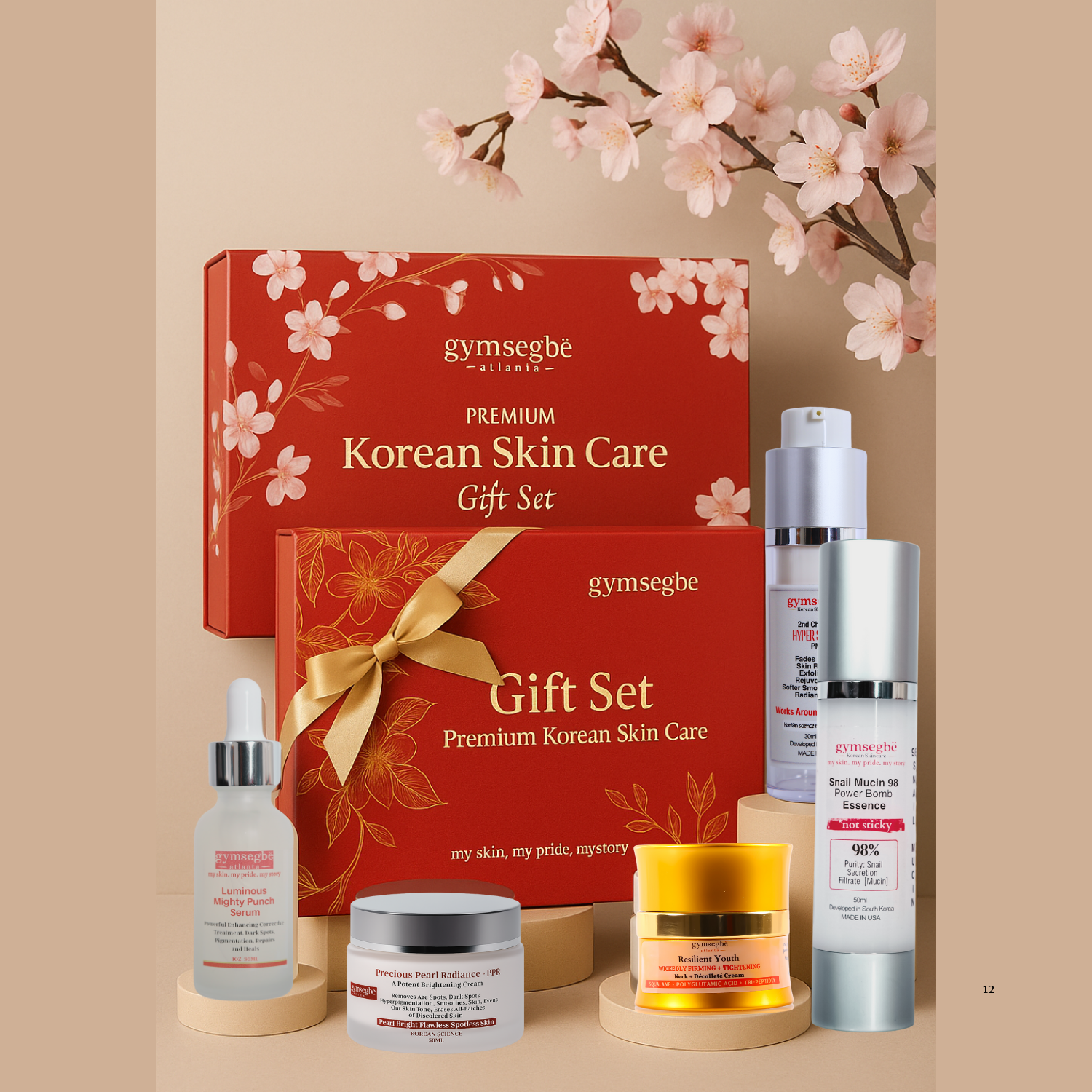
Shop Gymsegbe’s Complete Routine Set if you want a simpler way to start with hydration, brightening, and daily SPF in one system.
What People Mean When They Say “Dark Spots”
“Dark spots” is the phrase most people use when they notice uneven patches, leftover acne marks, sun-related discoloration, or stubborn pigmentation that lingers longer than expected.
But not all dark spots are the same.
That matters because the product that helps with post-breakout marks may not be enough for melasma. And the exfoliating routine that seems to brighten one person’s skin may make another person’s discoloration look worse if their barrier is already stressed.
Before you build a routine, you need to understand what your skin may actually be reacting to.
The 3 Most Common Types of Pigmentation

1. Melasma
Melasma usually appears as larger brown, tan, or gray-brown patches, often on the cheeks, forehead, upper lip, or jawline. It tends to look more symmetrical than a random breakout mark. It is often triggered by sun exposure, heat, hormones, pregnancy, birth control changes, or irritation.
Melasma is especially frustrating because it can improve and then come back. If that sounds familiar, your routine may need less aggression, more consistency, and stronger daily protection.
2. Post-Inflammatory Hyperpigmentation
Post-inflammatory hyperpigmentation, often shortened to PIH, is the discoloration left behind after inflammation. This can happen after acne, picking, friction, eczema, harsh exfoliation, or any kind of skin trauma.
PIH is especially common in melanin-rich skin because inflammation can leave behind more noticeable pigment changes. If your spot appeared after a breakout, rash, or irritation, PIH is often the more likely explanation.
3. Sun Spots
Sun spots, also called age spots or solar lentigines, tend to appear after repeated UV exposure over time. They are often more defined and concentrated in areas that get regular sun, like the cheeks, forehead, nose, chest, and hands.
These are more common as skin ages and usually respond best when brightening care is paired with consistent broad-spectrum SPF.
Melasma vs Post-Acne Marks vs Sun Spots: How to Tell the Difference
| Concern | What It Often Looks Like | Common Triggers | What Usually Helps | What Often Backfires |
|---|---|---|---|---|
| Melasma | Patchy, often symmetrical discoloration on cheeks, forehead, or upper lip | Hormones, sun, heat, visible light, irritation | Daily sun protection, gentle brightening, consistent routine, low-irritation care | Over-exfoliating, skipping sunscreen, harsh actives |
| Post-acne marks / PIH | Spot-like marks where breakouts or irritation happened | Acne, picking, friction, inflammation, overdoing active ingredients | Brightening ingredients, calming care, barrier support, patience | Picking, scrubbing, aggressive peeling, using too many actives at once |
| Sun spots | More defined dark spots in sun-exposed areas | Long-term UV exposure | Daily sunscreen, brightening support, gentle resurfacing when appropriate | Treating without protection, repeated unprotected sun exposure |
If your spots are broad, patchy, and seem to flare with heat, hormones, or sun, think melasma. If they show up exactly where a breakout or irritation happened, think PIH. If they are more distinct and tied to years of sun exposure, think sun spots.
Why Your Dark Spots May Not Be Fading
You’re treating all pigmentation like it’s the same
This is one of the biggest reasons people stay stuck. A lot of skincare advice treats every kind of discoloration like a generic dark-spot problem. But recurring melasma, post-breakout marks, and long-term sun spots often need different levels of protection, patience, and irritation control.
Your routine is too aggressive
Many people see discoloration and immediately stack acids, scrubs, peels, retinoids, and multiple serums all at once. That can leave skin tight, reactive, flaky, and inflamed. For sensitive skin and melanin-rich skin especially, irritation can keep uneven tone active longer.
You’re brightening without protecting
You cannot out-serum unprotected sun exposure. If you are trying to improve uneven tone without consistent SPF, you are making the job harder for every other product in your routine.
Shop Habaek SPF50 Sun Protection Moisturizer if your routine needs the daily protection step that helps prevent spots from looking darker over time.

Your skin barrier is stressed
A compromised barrier makes everything harder. When skin is dry, reactive, or over-exfoliated, it becomes harder to tolerate the ingredients people usually reach for to brighten and smooth tone. That leads to the cycle so many people know too well: try harder, irritate more, darken more, start over.
The Smarter K-Beauty Approach: Barrier First, Brighten Second
The best K-beauty routines are not about layering the most products. They are about building a system that makes sense.
If your goal is more even-looking skin, your routine should do four things:
- Reduce unnecessary inflammation
- Support hydration and barrier function
- Use brightening ingredients consistently, not aggressively
- Protect skin every single morning
That is where Gymsegbe is strongest. The brand works best when dark-spot care is treated as a routine, not a random-product chase.
The K-Beauty Routine That Actually Helps
Morning Routine
Step 1: Cleanse gently
The goal in the morning is not to strip your skin. It is to start with calm skin.
Step 2: Hydrate and prep
A hydrating toner or essence helps replenish water, support the skin barrier, and make the rest of your routine easier to tolerate.
Start here if your skin feels dull, dehydrated, or irritated:
Step 3: Use one brightening all-over treatment
You do not need three brightening serums before breakfast. Choose one well-positioned serum that helps support a more even-looking complexion without overwhelming your skin.
Two smart Gymsegbe options:
- Luminous Mighty Punch Serum for daily brightening, smoothing, and hydration support
- Dynamite Vitamin Serum if you want an antioxidant-brightening step with a more premium treatment feel
Shop Luminous Mighty Punch Serum if you want the most direct Gymsegbe serum fit for uneven-looking tone and post-breakout marks.
Step 4: Spot treat where needed
If some areas are more stubborn than others, a targeted step can make sense. This is especially helpful when the issue is concentrated rather than evenly spread across the face.
Eraser Spot Cream is the most obvious Gymsegbe fit here if your main concern is stubborn discoloration, post-acne marks, melasma-prone patches, or uneven tone that needs more focused attention.
Step 5: Finish with daily SPF
This is the non-negotiable step. If you are treating melasma, post-inflammatory hyperpigmentation, or sun spots, sunscreen is not just prevention. It is part of the routine that helps protect the progress you are trying to make.
Shop Habaek SPF50 Sun Protection Moisturizer to finish your morning routine with daily broad-spectrum protection.
Want the simplest version of this morning routine?
Shop the Gymsegbe routine set for toner, essence, serum, SPF50, and night cream in one concern-focused system.
Evening Routine
Step 1: Cleanse thoroughly but gently
At night, remove sunscreen, makeup, oil, and daily buildup without turning cleansing into punishment.
Step 2: Rehydrate the skin
Use your toner or essence again to bring water back into the skin and reduce that dry, reactive feeling that can make brightening products harder to tolerate.
Step 3: Repeat your main brightening support
Night is a good time to keep your routine steady, not dramatic. Consistency usually beats intensity.
Step 4: Target stubborn areas
Apply your spot treatment to the areas that need more focused help.
Step 5: Seal in moisture and support the barrier
This step matters more than many people realize. A well-supported barrier can make your brightening routine easier to stick with and easier for your skin to handle.
Which Ingredients Help Which Kind of Pigmentation?
For recurring, stubborn discoloration
Tranexamic acid is one of the most interesting ingredients in this conversation because it helps support a more even-looking complexion when pigment seems to keep coming back.
For general uneven-looking tone
Niacinamide is one of the most versatile ingredients in a routine because it helps support brighter-looking skin while also supporting the barrier.
For post-breakout marks
Ingredients like niacinamide, arbutin, licorice root, and vitamin C often make sense in routines designed to gradually improve the look of post-inflammatory marks.
For dull, reactive skin that still needs brightening
Hydrating and calming ingredients matter. A routine that is too harsh is often a routine that people cannot stay consistent with.
Luminous Mighty Punch Serum is especially relevant here because it sits in that sweet spot between brightening support and daily routine usability.
What to Avoid If Your Skin Is Sensitive, Melanin-Rich, or Pigment-Prone
If your skin tends to discolor easily, avoid turning your routine into a chemistry experiment.
- Too many exfoliating acids at once
- Frequent scrubs
- Over-cleansing
- Combining multiple strong actives too quickly
- Using products that burn or sting and pushing through
- Picking, rubbing, or repeatedly touching healing blemishes
- Skipping sunscreen while using brightening products
If a product consistently burns, your skin is not “adjusting beautifully.” Your routine may simply be too much.
A Simpler Gymsegbe Routine Path, Based on Your Main Concern
If your dark spots show up after acne or irritation
Focus on calm cleansing, hydration, one brightening serum, targeted spot care, and daily SPF.
Recommended path: Dynamic Toner -> Power Bomb Essence -> Luminous Mighty Punch Serum -> Eraser Spot Cream -> Habaek SPF50
If your discoloration is patchy, recurring, and hard to control
Focus on low-irritation brightening, strict daily protection, barrier support, and fewer, smarter steps.
Recommended path: Hydrating prep -> brightening serum -> targeted spot correction -> daily SPF -> evening moisture support
Shop Eraser Spot Cream if you want Gymsegbe’s most direct targeted product for stubborn discoloration concerns.
If your skin is dull, dry, and uneven all at once
Focus on hydration first, brightening second, one or two treatment steps only, and consistent sunscreen.
Recommended path: Dynamic Toner -> Power Bomb Essence -> brightening serum -> moisturizer/SPF in the morning
Not sure where to start?
Start with the complete Gymsegbe skincare set to build a more consistent routine around hydration, brightening, and daily protection.
The Biggest Mindset Shift: Stop Chasing Fast and Start Chasing Steady
Pigmentation often improves on the timeline of consistency, not panic.
That is especially true if your skin is sensitive, deeper in tone, hormonally influenced, or prone to irritation. The goal is not to overpower your skin. The goal is to help support a more even-looking complexion while protecting the skin you already have.
That is why Gymsegbe’s strongest role in this conversation is not “miracle fix.” It is smarter routine design:
- Clearer product roles
- Brightening without needless chaos
- Support for sensitive and melanin-rich skin
- A more complete path from confusion to consistency
FAQs
What is the difference between melasma and post-acne marks?
Melasma usually appears as broader, patchier discoloration, often symmetrically, and is commonly influenced by sun, hormones, heat, and irritation. Post-acne marks usually appear where inflammation, breakouts, or picking occurred.
Why do dark spots keep coming back?
Recurring dark spots may be tied to the wrong diagnosis, inconsistent sun protection, ongoing inflammation, or a routine that is too irritating to support steady improvement.
Can sunscreen help with hyperpigmentation?
Yes. Sunscreen helps prevent existing discoloration from looking darker and helps protect the progress made by brightening products.
Is K-beauty good for hyperpigmentation?
It can be, especially when the routine is barrier-aware and built around hydration, smart brightening ingredients, and daily protection rather than over-exfoliation.
Can sensitive skin use brightening products?
Yes, but the routine usually works better with fewer brightening steps, more hydration, and a stronger focus on barrier support.
Final Thought
If your dark spots are not fading, it does not automatically mean you need something harsher. Very often, you need something clearer.
The better question is not, “What is the strongest product I can use?” It is, “What kind of pigmentation am I dealing with, what may be keeping it active, and what routine will help my skin stay calm enough to improve?”
That is where better results usually begin.
If you want a smarter place to start, build your routine around:
- One gentle brightening step
- One targeted correction step
- One hydration-support step
- One daily SPF step
Ready to stop guessing?
Shop the full Gymsegbe routine or start with Eraser Spot Cream, Luminous Mighty Punch Serum, and Habaek SPF50 to build a more focused dark-spot routine.


